
This is a very useful post about Conditional Baptism from Fr. Paul Turner. I learn so much about liturgy just from reading his posts. Join his blog! paulturner.org
Benedict Esposito
Mystagogical Sessions Outside of the Eucharist
by Terry Zobel
The Rite does not have a whole lot to say about this period and it doesn’t really give us much in the way of how-to instructions for its implementation. What is does say can be found in paragraphs 244-51—a mere eight paragraphs. Those paragraphs give us the flavor, the tone, the mood for this rich period. For me, this period has three distinct elements.
Mystagogy: Looking back to move ahead
by Kathy Kuczka
The period of Mystagogy offers the newly initiated the opportunity to deepen their grasp of the paschal mystery by participating in the Eucharistic life of the parish community. It also offers the community the opportunity to acknowledge and celebrate the new life in their midst.
Where Are They Going and Where Have They Been?
by Rev. Paul Turner
Mystagogy is the period after the rites of initiation into the Catholic Church. It’s a time for settling in.
The Scrutiny Rites: The Presider’s Role
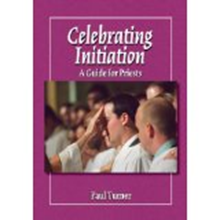 by Kathy Kuczka
In Celebrating Initiation: A Guide for Priests author Paul Turner, a priest of the Diocese of Kansas City-St. Joseph, leads priests through twenty-six rites of initiation, including adaptations for the baptized candidates, the various infant baptismal rites, and so on. With the Lenten season upon us, we will look at what he says about the scrutiny rites for unbaptized adults and children and the penitential rite for the baptized.
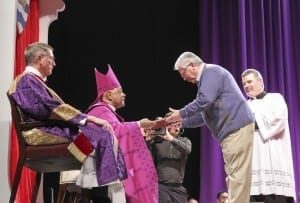
It’s Lent! Sessions for the Period of Purification and Enlightenment
by: Tina Harding
“The goal and focus of the catechesis during the period of purification and enlightenment is different from that during the period of the catechumenate. During the period of the catechumenate, the focus of catechesis was immersion into the fullness of the Christian community as expressed in the Catholic Tradition – scripture, doctrine, worship, community and service. The period of purification and enlightenment presumes such immersion and the readiness to make the commitment of baptism.
NOW THE FOCUS IS AKIN TO A RETREAT!
The Lenten Rites – Involving the Community
by Kathy Kuczka
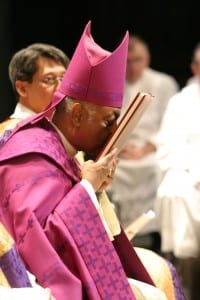
Lent is laden with rites for the Catechumens and Candidates. But, the rites aren’t only for the benefit of those in the process of initiation. The Rite of Christian Initiation tells us that rites should be executed so that the “entire community benefits.” Here are some ways to involve the initiating community.
Archbishop Gregory’s Statement Regarding the Annulment Process
Archbishop Gregory has released a statement regarding Pope Francis’ changes to the annulment process. For more information on the annulment process changes, please see this article on the Georgia Bulletin website: “After study by special Vatican commission, Pope Francis simplifies annulment process for some cases.”
First Encounters a.k.a. The Initial Interview
First Encounters a.k.a The Initial Interview
by Kathy Kelly-Huey
It often begins with a phone call
The adage “you only get one first impression” is apt when we consider the initial conversation we have with those who grace us with a phone call asking, “When does RCIA start?” The way we answer this question influences every subsequent action and interaction we share with the person who posed the question. I like to answer the question with, “The moment you picked up the phone to call me.” By beginning with an affirmation of how God has already been at work in the Inquirer’s life and that he/she has already responded to the Holy Spirit assures the Inquirer that he/she has arrived on time and in time and is right where he/she is supposed to be. If he/she had begun this journey any sooner, he/she might not have been ready for the journey. Jesus didn’t call all the apostles on the same day either. For some this is an initial awareness of how God has been active in their life.
Sorting Fish: A Task at the Beginning (Part 3)
Baptized Christians. Debbie and Ernest are both baptized Christians. Debbie is a young professional, single and searching for “something more” in her life. Although baptized in the Methodist church as an infant, her family was not active in any church. She has had no formal religious training. Because of some conversations with a Roman Catholic colleague, she is interested in Catholicism.